
In honor of Administrative Professionals Day, celebrated each April, it’s worth recognizing the important work that keeps businesses running smoothly behind the scenes. Administrative professionals play a critical role in supporting daily operations, coordinating communication, organizing information, and helping leaders stay focused on strategic priorities.
Administrative tasks are sometimes viewed as routine work, but in reality, they form the backbone of organizational efficiency. From scheduling meetings and managing documents to ensuring information flows between teams, administrative support enables businesses to function effectively.
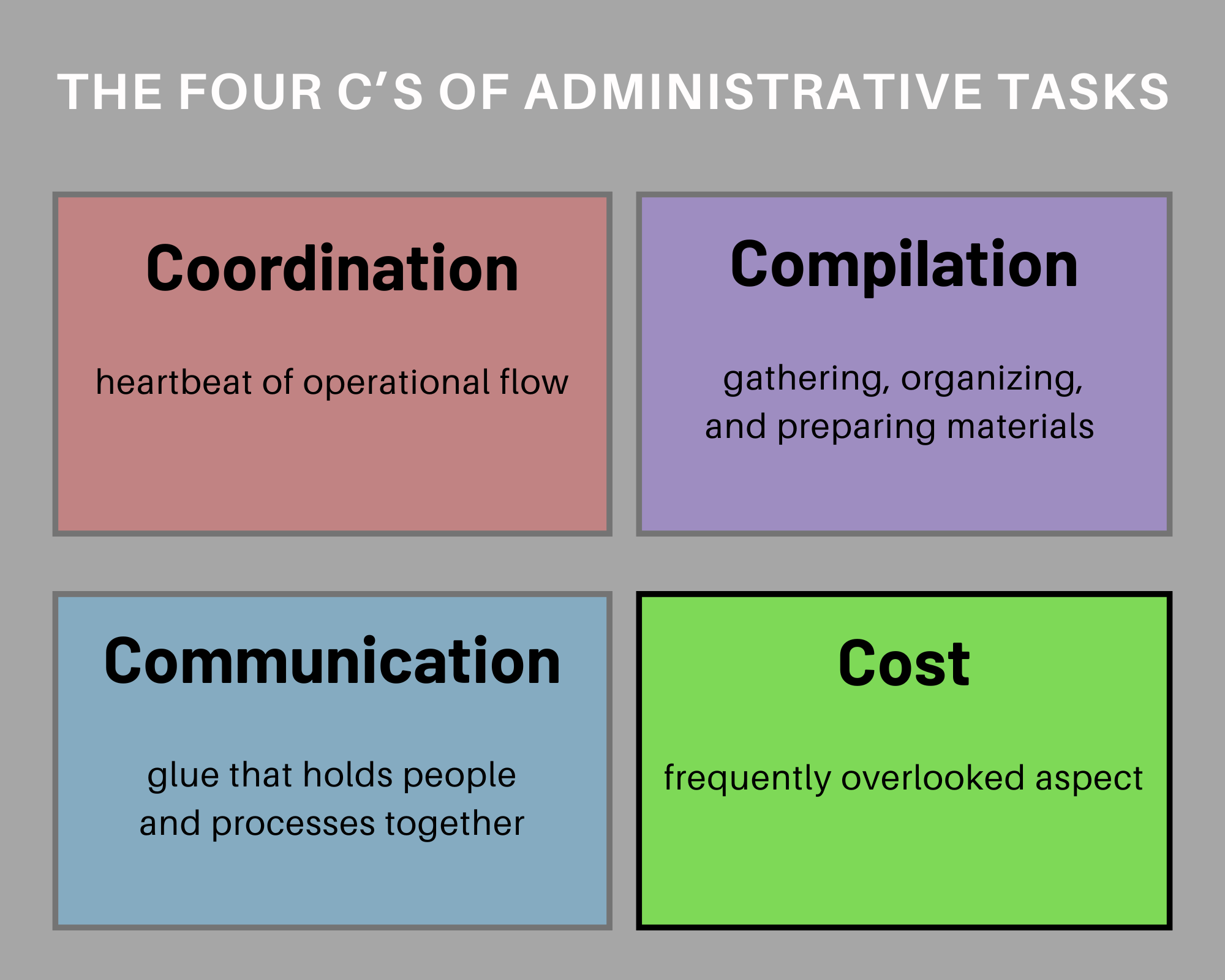
One way to better understand the value of administrative work is through the Four C’s of administrative tasks: Coordination, Compilation, Communication, and Cost. Each of these functions plays a vital role in maintaining productivity and operational flow within an organization.
Coordination in Administrative Work
Coordination is the heartbeat of operational flow. Administrative professionals are often responsible for managing calendars, scheduling meetings, setting deadlines, and ensuring the right people are connected at the right time. While these tasks may appear simple on the surface, effective coordination requires strong organizational skills, attention to detail, and an understanding of team priorities.
When coordination is handled well, projects move forward efficiently, and teams remain aligned. Clear scheduling and proactive planning help prevent missed opportunities, duplicated work, and costly delays. By keeping leaders and teams organized, administrative support ensures that valuable time is spent on strategic work rather than logistical challenges.
Compilation and Information Management
Compilation refers to gathering, organizing, and preparing important materials such as reports, documents, presentations, and reference files. Administrative professionals frequently serve as the central hub for information management within an organization.
When documents and information are compiled clearly and stored in accessible systems, team members can quickly find what they need to make decisions and move projects forward. Effective document organization reduces time spent searching for resources and minimizes confusion across teams.
On the other hand, poor compilation practices can lead to duplicated efforts, outdated information, and wasted time. By maintaining organized records and structured documentation, administrative professionals help ensure that businesses operate efficiently and stay informed.
Communication and Administrative Support
Communication is the glue that holds people and processes together. Administrative professionals often act as key communication connectors between departments, leadership teams, vendors, and clients.
Whether following up on action items, relaying updates, or coordinating project details, administrative roles help ensure that everyone stays informed and aligned. They also frequently assist with digital tools, collaboration platforms, and internal systems that support daily operations.
Because administrative professionals are involved in many aspects of the workflow, they are often the first to notice when something is slipping through the cracks. Their proactive communication helps address issues quickly and keeps projects moving forward smoothly.
Understanding the Cost of Administrative Tasks
The final C is Cost – an aspect of administrative work that is often overlooked. Every administrative task carries a time cost, and in business, time translates directly to money.
When highly compensated leaders spend hours each week scheduling meetings, organizing files, or managing routine administrative responsibilities, the true cost of those tasks increases significantly. Delegating administrative tasks to trained professionals ensures they are handled consistently and efficiently.
Effective administrative support allows leaders and specialists to focus on higher-value activities such as strategic planning, client relationships, and business development. In this way, administrative professionals contribute directly to productivity, efficiency, and organizational growth.
Why Administrative Professionals Matter
Administrative work is far more than routine busywork – it is essential operational infrastructure. Businesses that recognize the value of administrative professionals often experience smoother workflows, better communication, and stronger productivity across teams.
By supporting coordination, organizing information, facilitating communication, and managing administrative workload, these professionals play a vital role in keeping organizations running effectively.
Investing in the right people, systems, and support for administrative functions pays dividends across every part of a business.
Start the Conversation
If your organization is experiencing operational strain, leadership friction, or structural growing pains, let’s talk. Tell us a little about what’s happening by completing the short form at https://success-trek.com/takeaction/, and we’ll follow up to coordinate a free 30-minute video conversation to explore how Success Trek may be able to help.
